|
|
|
|
|
|
|
pairs along the row and replaced the last two in the original pile of pebbles. If, in this case, the row was completed before all the pebbles from one casting were arranged, all those which remained were put back in the original pile, since each row was begun with a fresh casting. When an odd number remained, only the last pebble counted was placed in the row. The number of rows arranged depended upon the context of the pattern's message. When the message seemed incomplete or inappropriate, Pa Biyare continued until he perceived a complete or satisfactorily modified message. |
|
|
|
|
|
|
|
|
During this process, there was no dialogue between diviner and client. Even when interpreting the pattern of pebbles and indicating the sacrifice required, neither Pa Biyare nor other diviners put much beyond a bare minimum of explanation and prescription into words. |
|
|
|
|
|
|
|
|
My own training similarly involved minimal verbal exegesis, consisting mostly of the practical demonstration of patterns and the reading of key elements within them in response to hypothetical cases. The patterns were, to use Werbner's term (1989:21), microdramatic, iconically exhibiting categories of people, encounters, events, sacrifices, and medicines within a microcosm. I will examine two hypothetical cases which Pa Biyare constructed during my instruction. |
|
|
|
|
|
|
|
|
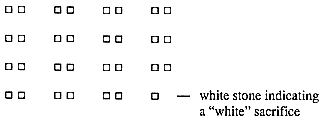
In the first case the pebbles were aligned in this way: |
|
|
|
|
|
|
|
|
 |
|
|
|
|
|
|
|
|
This pattern of twos, Pa Biyare explained, resembles a crowd of people and indicated death, because a funeral is the most common reason for such a gathering. He noted, however, that the same pattern would indicate good for tune if a client were asking whether he should make his farm in a particular place, or if he would succeed in a chieftaincy election. Pa Biyare's daughter, who was also learning an-bere from him and was perhaps for this reason more able to verbally articulate the basis for particular interpretations, interjected this explanation: "An-bere are showing a crowd. If you farm and get plenty of rice, plenty of people will come. If you get the chieftaincy, a crowd will come. If there is a death, people will come for the funeral." Pa Biyare added that the single white stone at the bottom right of the pattern showed that a "white" sacrifice should be made; for example, a white sheep, chicken, kola nuts, cloth, or rice flour cake. |
|
|
|
|
|